HAPS Vs Satellites: Which Is The Winner In Stratospheric Coverage?
1. The Question Itself Represents shifts in how we View Coverage
Since the beginning of thirty years, the debate about reaching remote or underserved areas from above has been made into a debate about the best option between ground infrastructure and satellites. The rise of feasible high-altitude platform stations is introducing an alternative option that doesn’t easily fit into any category this is what is interesting about the debate. HAPS aren’t seeking to replace satellites all over the world. They’re competing for specific use instances where physics operating at 20 km instead of 35,000 or 500 kilometers produces significantly better results. Understanding where that advantage is real and which areas it’s not in the end is the essence of the game.
2. Latency Is Where HAPS Win In a Straight Line
The speed of transmission is determined by distance, and distance is one of the reasons why stratospheric satellites have the advantage of having a clear structural advantage over other orbital systems. Geostationary satellites sit approximately 35,786 km above the equator, resulting in roundstrip latency in the range of 600 milliseconds. That’s enough for voice calls, but with a significant delay, problematic for real-time applications. Low Earth orbit constellations have greatly improved this situation and operate at 550 to 1,200 kilometres with latency in the 20 to 40 millisecond range. A HAPS-equipped vehicle traveling at 20 kilometers can deliver latency levels similar for terrestrial networks. For applications where responsiveness matters (industrial control systems emergency communications, financial transactions direct-to-cell connectivity the difference isn’t just marginal.
3. Satellites Gain Global Coverage, and That Matters
A stratospheric spacecraft currently under consideration is able to cover all of the planet. It is true that a single HAPS vehicle has a regional footprint that is large in comparison to terrestrial dimensions, but small by the standards of terrestrial technology, but. To achieve global coverage, it is necessary to build a network of platforms distributed across the globe and each with their own operations along with energy systems and station maintenance. Satellite constellations, particularly large LEO networks, can blanket the surface of Earth with overlapping capabilities that stratospheric systems simply isn’t able to replicate using current vehicle counts. For applications requiring truly universal reach like maritime tracking, global messaging, and polar coverage — satellites remain one of the most reliable options at scale.
4. Resolution and Persistence Favor of HAPS on Earth Observation
If the job involves monitoring an entire region in continuous detail — tracking methane emissions from an industrial area, observing the development of a wildfire in real-time or monitoring oil pollution being released from an offshore incident The continuous and close-proximity character of a stratospheric platform produces data quality that satellites struggle to keep up with. Satellites in low Earth orbit passes by any given point on the floor for minutes at time and revisit intervals are measured in either hours or days based on constellation size. A HAPS vehicle holding position above the same region over weeks gives continuous observations with sensor proximity that supports much higher resolution spatial. for stratospheric purposes in earth observation that endurance is usually greater than a global reach.
5. Payload Flexibility is a HAPS Advantage Satellites Aren’t readily match
Once a satellite is created, its payload has been fixed. The upgrading of sensors, the swapping of communication hardware, or adding additional instruments requires launching an entirely new spacecraft. The stratospheric platform returns back to the earth during mission launches meaning that its payload can be reconfigured, upgraded and completely redesigned as the requirements of missions change or new technology becomes available. Sceye’s airship’s design is specially adapted to the capacity of a payload that is meaningful, allowing various combinations of telecommunications equipment, carbon dioxide sensors as well as catastrophe detection systems on the same aircraft and a scalability that would require multiple dedicated satellites to replicate each with their own budget for their launch, as well an orbital slot.
6. The Cost Structure is Fundamentally Different
The launch of a satellite requires cost of the rocket as well as ground segment development, insurance and the recognition that hardware failures in orbit are permanent write-offs. Stratospheric platforms work more like aircrafts. They can be recovered, examined or repaired before being repositioned. This doesn’t automatically make them more expensive than satellites on percentage basis, but it can alter the risk profile as well as the upgrading economics significantly. For operators testing new services to enter new markets the ability to retrieve and modify the platform just accepting it as an sunk expense offers a significant advantage in operation and is particularly relevant in the early commercial phases the HAPS sector is currently working through.
7. HAPS could be used to provide 5G Backhaul Where Satellites Don’t Effectively
The telecommunications infrastructure that is enabled by a high-altitude platform station operating as a HIBS or an actual cell tower in the sky and is designed to interface with existing cell phone standards, but in ways which satellite technology typically isn’t. Beamforming using a stratospheric communications antenna permits dynamic allocation of signal across a broad coverage area and supports 5G backhaul equipment on the ground as well as direct-to devices simultaneously. Satellite systems are now more efficient in this space, but the fact that they operate closer to the ground provides stratospheric devices an advantage in signal power, frequency reuse, and the ability to work with spectrum allocations that are designed for terrestrial networks.
8. The Operational Risk and Weather Variation Differ In a significant way between the Two
Satellites, when they are in stable orbit, have a tendency to be indifferent to the weather on Earth. A HAPS vehicle operating in the stratosphere will face an even more complicated operating environment — stratospheric wind patterns including temperature gradients and the engineering challenge of making it through night at altitude without losing station. Diurnal cycles, also known as the every day rhythm of solar energy availability and overnight power draw is a major design constraint which every solar-powered HAPS has to overcome. New developments in lithium sulfur battery energy capacity and cell efficiency in solar panels are closing the gap, but it is an actual operational concern that satellite operators simply don’t confront in the same manner.
9. It’s a fact that They serve different missions.
Making HAPS and satellites appear as an open-ended competition does not reflect how infrastructure that is not terrestrial will evolve. The more accurate picture is a multi-layered framework in which satellites have worldwide reach and services where universal coverage is more important than anything else and stratospheric platforms are used for the regional persistence mission -the connectivity of geographically challenging environments, continuous environmental monitoring, disaster response, and the expansion of 5G into areas in which it is not economically feasible to roll out terrestrial networks. Sceye’s geographical positioning is based on what it says: a mobile platform created to handle things within a specific region, for longer periods of time, and with sensors and a communications payload which satellites won’t be able to replicate at that elevation and proximity.
10. The Competition Will Sharpen Eventually Both Technologies
There’s a reason to believe that the growth of credible HAPS programs has led to a surge in development in satellite technology and the reverse is true. LEO satellite operators have advanced both coverage and latency ways that increase the standard HAPS needs to clear in order to compete. HAPS developers have shown persistent regional monitoring capabilities, which will force satellite operators to look at revisit frequency and sensor resolution. The Sceye and SoftBank partnership to support Japan’s massive HAPS network, with the first commercial services expected for 2026 is one of the clearest evidences yet that stratospheric platforms have evolved from a theoretical rival to active participant in determining how non-terrestrial connectivity and observation market develops. Both technologies will be more effective in the face of pressure. Check out the top rated marawid for more recommendations including whats the haps, sceye haps airship specifications payload endurance, softbank sceye partnership haps, Sceye endurance, Sustainable aerospace innovation, sceye haps airship status 2025 2026 softbank, HAPS technology leader, investment in future tecnologies, solar cell efficiency advancements for haps or stratospheric aircraft, sceye haps softbank japan 2026 and more.
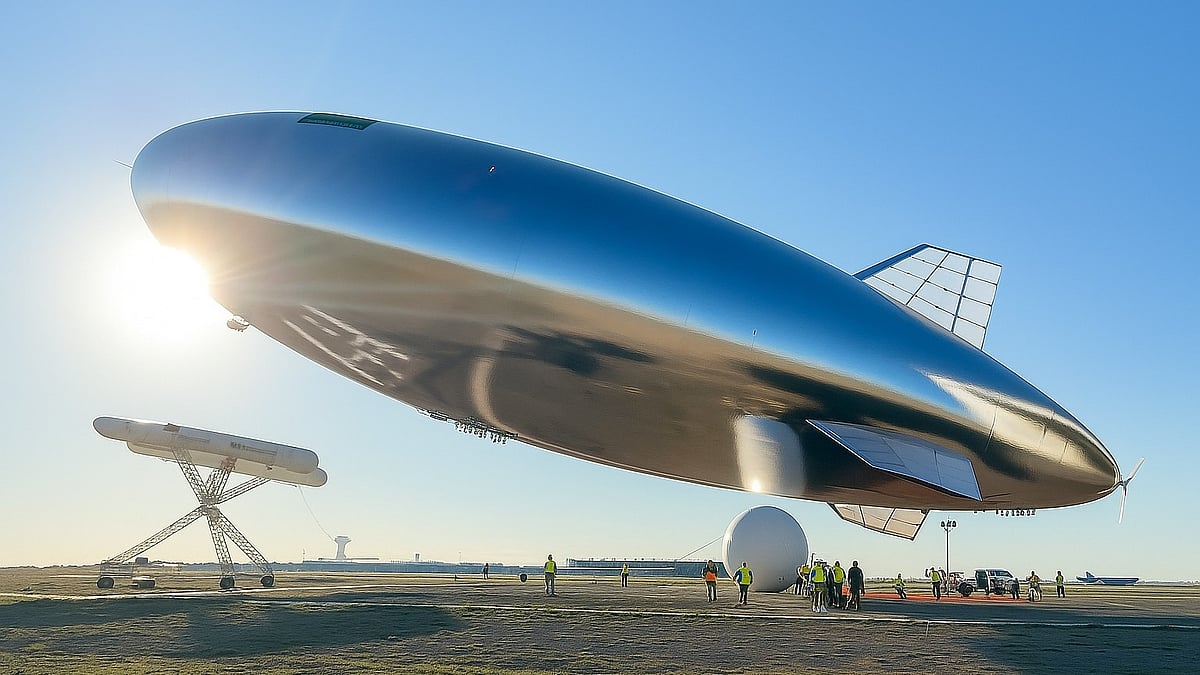
The Stratospheric Platforms That Are Shaping Earth Observation
1. Earth Observation has always been constrained to the Observer’s Place
Every step in the human race’s ability to monitor the planet’s surface has been based on finding a better vantage point. Ground stations were able to provide precise local information but not reach. Aircrafts added range but consumed gas and require crews. Satellites brought coverage around the world, however they also introduced distance that weighed Resolution and revisit frequency against scale. Each increment in altitude alleviated some of the problems while introducing additional ones. The compromises made by each approach has shaped our perceptions about our planet. But, more importantly, what we aren’t able to clearly implement. Stratospheric platforms are avantage point that sits between satellites and aircraft with the intention of resolving several of the most difficult choices, instead of simply shifting the two.
2. Persistence is a Capability of Observation That Changes Everything
The most transformational thing the stratospheric platforms can provide for earth observation has nothing to do with resolution not the area of coverage, and definitely not sensor sophistication — it is the persistence. The ability to follow the same spot over and over again, for days or weeks at a stretch, with no gaps in the information record is a change in the kind of questions that earth observation will be able to answer. Satellites address questions of state — what does this location appear like at the moment? Persistent stratospheric stations answer questions regarding process: how is this situation developing and at what speed and due to what causes, and at what point will intervention be required? In the context of monitoring greenhouse gas emissions, flood progression, wildfires as well as the spread of coastal pollution The questions about process are the ones that determine the final decision as they require continuity that only observation over time can provide.
3. The Altitude Sweet Spot Produces Resolution That Satellites Cannot Match at Scale
Physics determines a relationship between elevation, aperture for sensors, and ground resolution. A camera operating at 20km can attain ground resolutions that require an extremely large aperture to replicate from low Earth orbit. It is the reason a stratospheric Earth observation platform is able to distinguish distinct infrastructure elements — pipelines, storage tanks land plots for agriculture, and vessels that are anchored in the oceanthey appear as sub-pixel blurs in satellite images at an equivalent cost. For instance, monitoring the spread of pollution from an offshore facility and identifying the exact location of methane leaks along the pipeline’s route or tracing the leading edges of a wildfire in the terrain, this resolution advantages directly impacts the accuracy of the information accessible to users and decision-makers.
4. Real-Time Monitoring of Methane Becomes Operationally Effective from the Stratosphere
Methane monitoring by satellites has increased significantly in recent years However, the mix of revisit frequency and resolution limits results in satellite-based methane detection being able to identify large, persistent emission sources, rather than intermittent releases from certain point sources. A stratospheric-based platform that is able to perform real-time methane monitoring for an oil and gas-producing zone, a large agricultural zone, or waste management corridor can alter the dynamic. Continuous monitoring at stratospheric resolution can identify emissions events as they occur, assign them to specific sources with a precision that satellite data cannot routinely give, and also provide the kind of time-stamped, source-specific proof that regulatory enforcement and voluntary emission reduction programs are both required to operate effectively.
5. Sceye’s Methodology Combines Observation and the Architecture of Missions Broader
What differentiates Sceye’s methodology for stratospheric-level earth observation from doing it as a single detection system, however is the integration of observation capabilities within a broader multi-mission platform. The same vehicle which is carrying greenhouse gas sensors also includes connectivity equipment for disaster detection systems and potentially other environmental monitoring payloads. This integration isn’t simply a cost-sharing exercise, but will reflect a more coherent view of all the data streams from multiple sensors will be more valuable when they are in conjunction than when they are used separately. One that connects and also observes is more valuable for operators. An observation platform that also has emergency communication capabilities is more efficient for governments. The multi-mission structure increases the use of one stratospheric mission in ways multiple, specific-purpose vehicles will not replicate.
6. Oil Pollution Monitoring illustrates the operational benefits of close Proximity
Controlling oil-related pollution coastal and offshore conditions is a sector where stratospheric observation has advantages over both satellite and aircraft approaches. Satellites are able to detect large slicks, but struggle to achieve the required resolution to spot spread patterns, shoreline contact and the behavior in smaller releases before larger ones. Aircrafts can attain the required resolution but can’t maintain constant coverage over large areas, without huge operational expenses. A stratospheric platform that is located above the coastal area can monitor pollution events from the moment of initial identification through spread along the shoreline, to eventual dispersal. It provides the continuous temporal and spatial data that both emergency response and legal accountability demand. The capability to monitor oil pollution over a long observation time frame without gaps is impossible with any other platform type with comparable costs.
7. Wildfire Observation from the Stratosphere Captures What Ground Teams Aren’t able to See
The perspective that the stratospheric horizon can provide over an active wildfire is qualitatively different to that available at ground-level or from aircrafts flying low. The behavior of fires across complex terrain and spotting before an active firefront, the process of fire development, interactions between fire, weather patterns and fuel moisture gradients are evident in its complete space only from an altitude. A stratospheric viewing platform for active fires provides incident commanders with a constant, large-area view of fire behavior which enables the decision-making process of resource deployment according to what the fire is doing instead of what the ground teams in particular places are experiencing. Finding climate disasters that are occurring in real time from this angle does more than just enhance responseit improves the effectiveness of decisions taken by the command team throughout the duration of the event.
8. The Data Continuity Advantage Compounds Over the course of time
Individual observations have value. Continuous observation records contain compounding value that grows exponentially with the length of time. A week’s stratospheric observation data across an agricultural region creates the foundation. A month’s data reveal seasonal patterns. The year encompasses the entire annual cycle of crop development the use of water soil condition, as well as yield variations. Recordings over multiple years provide the basis for understanding what is happening to the region in response to changes in climate as well as land management practices and changes in the availability of water. For natural resource management applications — agriculture, forest, water catchment, coastal zone management — this accumulated observation record is usually more valuable than any single observation, regardless of the resolution or the speed at which it’s delivered.
9. The Technology that permits Long Observation missions is rapidly evolving.
Stratospheric geo-observation is only depending on the platform’s capacity to stay in place for a long time enough to record accurate data records. Energy systems are what determine endurance — solar cell efficiency on aircrafts that fly in stratospheric space, lithium-sulfur’s battery energy density approaching 425 Wh/kg; the closed power loop which sustains all systems through the diurnal cycle — are improving at a pace that is beginning to make multi-week, multi-month stratospheric missions operationally realistic rather than aspirationally planned. Sceye’s work at New Mexico, focused on testing these systems in real operational conditions rather than research projections, is a sign of the kind of engineering progress which directly translates into longer observation missions, and more important data records for applications that depend on the systems.
10. Stratospheric Platforms are Creating an entirely new layer of environmental Reputability
Perhaps the most impactful long-term consequence of stratospheric observation capabilities is what it does to our information surroundings around environmental compliance as well as managing natural resources. When continuous, high resolution monitoring for emission sources, changes in land use water extraction, and pollutant events is available constantly instead of intermittently, the accountability landscape changes. The agricultural sector, industrial operators, governments, and companies engaged in extraction of natural resources all behave differently when they realize what they are doing is being continuously monitored from above and using data that is precise enough to have legal value as well as timely enough to inform the regulatory response before the damage becomes irreversible. Sceye’s topospheric platforms as well as the larger category of high-altitude platforms that are pursuing similar observation tasks, are creating the foundations for a future where environmental responsibility is grounded with continuous observation rather periodic self-reporting — a shift with implications that extend far beyond the aerospace industry that makes it possible. Check out the best Beamforming in telecommunications for more info including stratospheric internet rollout begins offering coverage to remote regions, what does haps stand for, Cell tower in the sky, sceye haps payload capacity, sceye haps airship specifications payload endurance, aerospace companies in new mexico, what are the haps, sceye haps project updates, whats the haps, softbank pre-commercial haps services japan 2026 and more.
